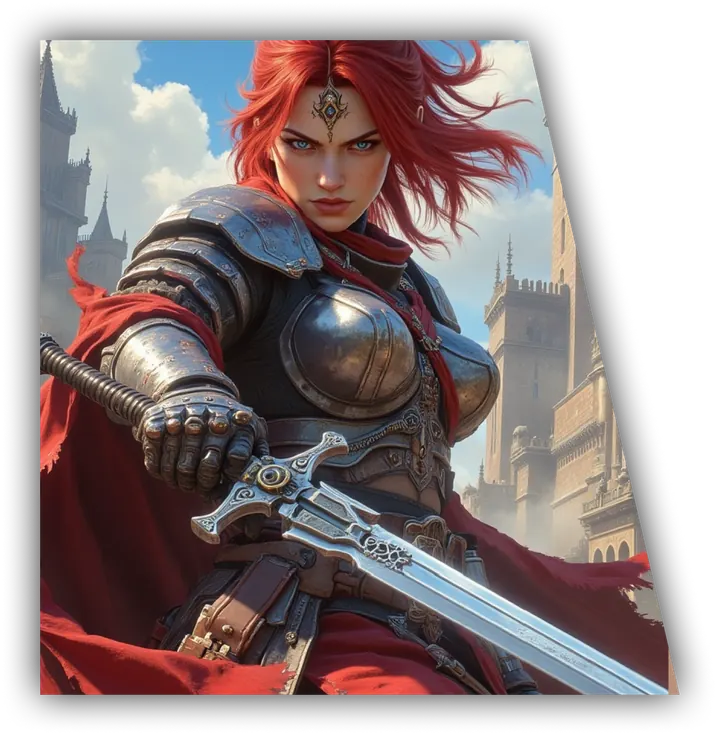
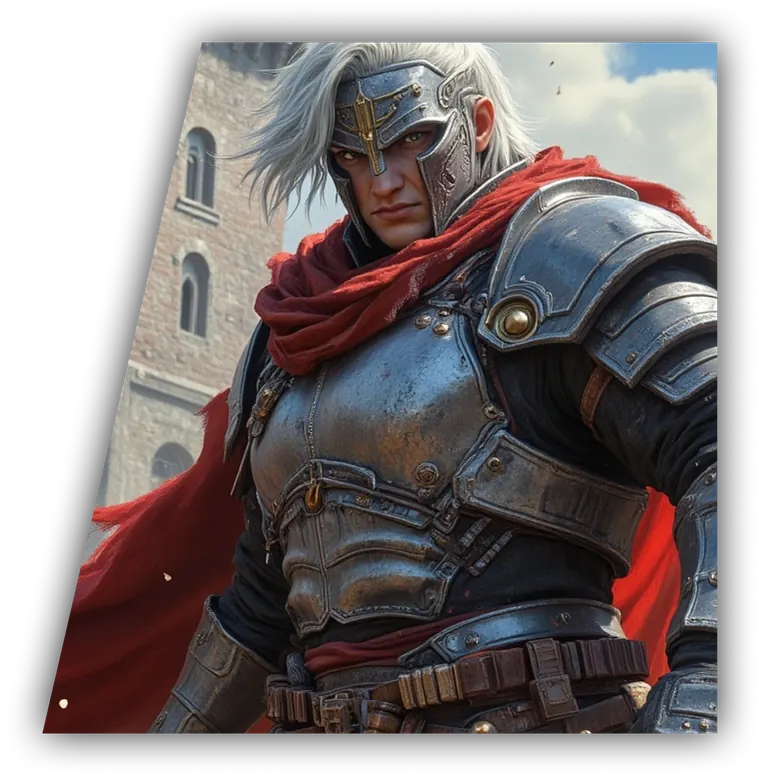
Reincarnated in Another World: Why We Keep Waking Up Somewhere Else
Isekai is the oldest reader wish written plainly: leave this world for one where you matter. Here is where the wave came from β and how to step inside it.
Why does half the fiction on every reading app begin with someone waking up somewhere else? Scroll any web-novel platform, any manga storefront, any anime season chart, and there it is, again and again: an ordinary person dies, or falls, or steps through a door, and opens their eyes in another world. The genre is called isekai β Japanese for "different world" β and it has become one of the largest bodies of popular fiction on the planet. If you have ever searched for an isekai game, a way to stop reading about the person who wakes up somewhere else and start being that person, this essay is for you.
Here is the short answer. Isekai is not a fad; it is the oldest wish in reading, written out plainly. Every reader who has ever loved a book has wanted to leave this world and enter one where they matter, and isekai simply stops pretending otherwise. An isekai game, done properly, takes that wish literally: instead of following someone else through the door, you go through it yourself.
That is the argument of this essay. But the wish deserves its history first, because the wave did not come from nowhere.
The door has always been there
Before anyone coined the word isekai, English readers had a name for the same shape: portal fantasy. A wardrobe with a winter behind it. A rabbit hole with a mad tea party at the bottom. A tornado that sets a farmhouse down in a country of witches and roads made of yellow brick. A whole strand of nineteenth- and twentieth-century fiction runs on a single hinge β an ordinary person from our world crosses into another one, and the crossing itself is the point. Mark Twain sent a Connecticut engineer back to Camelot in 1889, and the engineer's modern know-how in a medieval world is, beat for beat, the plot of a thousand web novels being serialized this week.
The portal endures because it solves the deepest problem of fantasy: how do you get a reader into a strange world without drowning them in explanation? Answer β send in someone as ignorant as they are. The newcomer asks the questions the reader would ask. The newcomer is amazed where the reader would be amazed. The portal protagonist is not just a character; they are a courtesy, a hand extended through the page.
Japanese fiction took that hinge and industrialized it. Web-novel platforms β where anyone could serialize a story and readers voted with their attention, chapter by chapter β discovered through sheer volume what readers reliably wanted, and what they wanted was the door. Reincarnated as a swordsman, a spider, a slime, a vending machine; summoned as a hero; transmigrated into a villainess's body. The premise mutated endlessly, but the hinge never changed: someone from a world like ours, waking in a world that runs on different rules. From web novels the wave rolled into light novels, then manga, then anime, then everywhere. Korean and Chinese platforms built parallel booms of their own. Translation carried all of it westward, and readers who had grown up on wardrobes and rabbit holes recognized the shape instantly. Of course they did. It was theirs too.
What the trope is honest about
It is easy to condescend to isekai, and plenty of people do β power fantasy, wish fulfillment, escapism by the crate. All true, and all beside the point, because isekai's real distinction is that it is honest about desires most fiction dresses up.
Consider what the standard premise actually promises. A fresh start: whoever you were before the truck, the summoning circle, the mysterious fever β that ledger is closed. A world where your knowledge counts: the office worker's spreadsheet habits become a kingdom's logistics revolution; the pharmacist's training becomes miracle-working; even having read a lot of fantasy becomes a survival skill, because you know how these stories go. And a world that notices you. In this world you were one commuter among millions. In that one, your arrival is an event.
Strip the swords and status screens away and what remains is a wish nearly everyone has had on a bad Tuesday: what if you could start over somewhere your particular way of thinking actually mattered? Isekai does not mock that wish or bury it under irony. It builds a genre on it. That candor is why the trope survives its own saturation β parodies of isekai are themselves isekai, deconstructions of it are isekai, stories about being tired of isekai take place in another world. The door absorbs everything, because the desire behind the door is real.
And notice who the desire belongs to. Not to the character β to the reader. Every isekai protagonist is a stand-in, an avatar with the serial numbers filed off, often literally a reader or gamer in their old life. The genre's worst-kept secret is that it was never really about watching someone else cross over.
What an isekai game can promise that a novel can't
Which brings us to the turn. A novel about waking up in another world has a limit built into its spine: the person who wakes up is not you. You can ride along behind the transmigrator's eyes, cheer the clever use of modern knowledge, feel the fresh start secondhand. But the choices were made before you opened the book. When the summoned hero says the wrong thing to the princess, you wince and keep reading, because there is nothing else to do.
Games have always circled this promise. Plenty of titles borrow isekai's costume β the trapped-in-the-game premise, the reincarnated hero, the summoning cutscene β and then hand you a menu of dialogue options written months in advance, which is to say, they hand you someone else's crossing with buttons attached. The premise says you have arrived in another world; the design says you may select from three approved ways to have arrived.
The honest version of the promise is harder. If the fantasy is a world where your knowledge counts, then the game has to accept your knowledge β the actual contents of your actual head, not a skill tree's approximation of it. If the fantasy is a fresh start, the world has to genuinely not know what you will do next. And if the fantasy is a world that notices you, then what you did early in the story has to still be true much later. A fresh start that resets every scene is not a new life; it is a waiting room.
For most of gaming's history, that was simply too much to ask. A world that responds to anything you might say or try could not be written in advance, because you cannot pre-write a person. The genre made a promise that its medium could only mime. That is no longer quite true.
Stepping through the door yourself
This is the wish Runebook was built around. Runebook is an AI story game: the Storyteller runs the world, and you act by typing what you want to say or do β or accepting a suggested action, or speaking it aloud. There is no menu of approved crossings. Wake up in a body that is not yours at the foot of a throne, in a guild hall that has never heard your name, in a story you half-remember reading β and then do whatever you would actually do. Bluff. Bargain. Warn the king about the harvest. Use what you know.
And the world keeps a ledger. The story remembers what matters β the promise you made in the second scene, the noble you humiliated, the name you gave when you had to invent one fast β so the fresh start accumulates into an actual life rather than resetting behind you. Narration reads the tale aloud as it unfolds, scene imagery gives your other world a face, and you can cross over solo or bring friends through the door for a shared story. It plays in your browser, in manga-style worlds and beyond β fantasy, romance, horror, mystery, or a custom story spun from your own premise, which for this genre usually starts with four words: what if you woke upβ¦
If your taste in doors runs specific, we have gone deeper down two of them: what it means to be the main character rather than the audience, and the transmigration subgenre's sharpest pleasure, playing the villainess whose downfall you have already read. And if manga-style worlds are your home shelf, the AI manga story game page is the door marked for you.
Half the fiction on every reading app begins with someone waking up somewhere else because every reader has wanted to be that someone. You no longer have to want it from the far side of the page. Create an account and start your first story β it's included. Start your story β and see where you wake up.