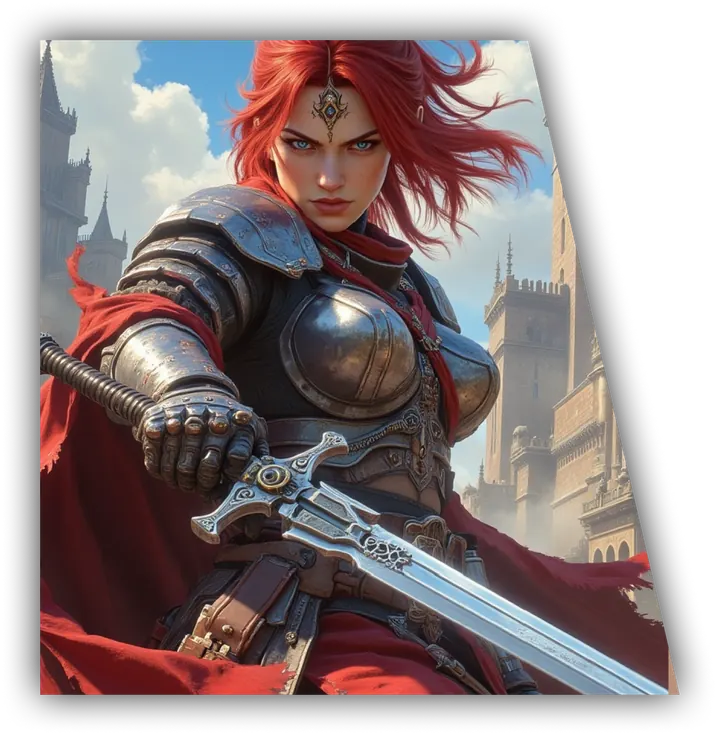
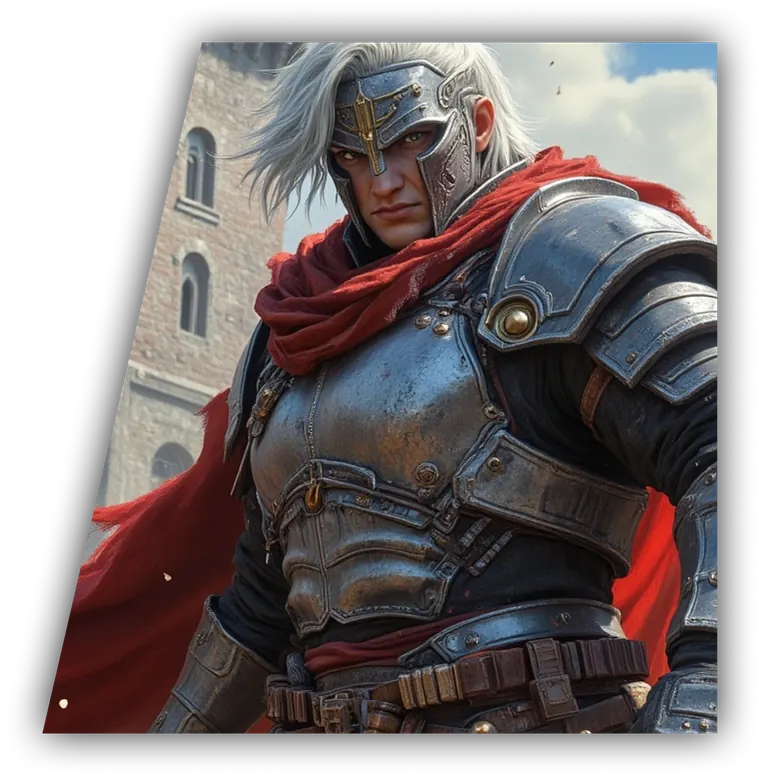
Tell Runebook the story you want: a murder to solve, a love worth risking, a haunting to survive. Then start living it. No fixed branch path. No rules to learn. The story keeps adapting around what you do, and it remembers what you did.
Pick a door, then let your choices carry the story forward.
How it works: the game where you make the story
You don’t write the story. You don’t pick it off a shelf. You live it, and one sentence is enough to start.
1
Say what story you want
“A cozy mystery in a seaside town.” “A romance my family would never allow.” “Something spooky, set in a lighthouse.” One sentence is enough. The Storyteller builds the world around it and opens the first scene with you already inside. No rules to learn, no manual to read.
2
Do what you’d actually do
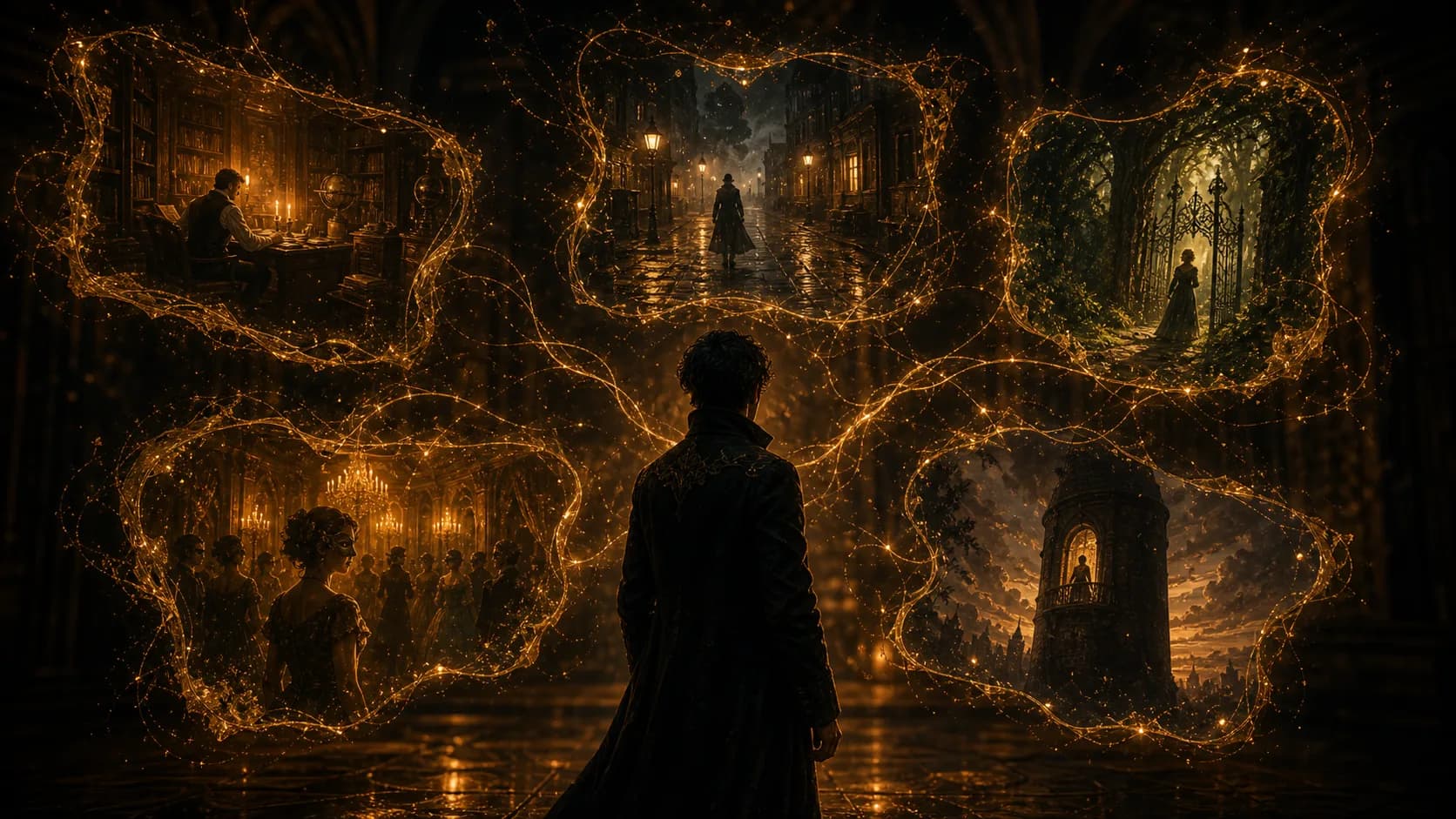
Tap a choice, type anything, or say it out loud. Interrogate the heiress. Burn the letter. Kiss the spy. Try something nobody ever wrote, and the story responds. At pivotal moments, fate gets a say.
3
The story remembers
What you said, who you crossed, the promise you made: the story keeps all of it, and all of it comes back. One scene later, those are choices. Ten scenes later, they are history. Stop whenever you like; your story holds its place, and the people in it hold their grudges.
Runebook for mobile
Take your story with you
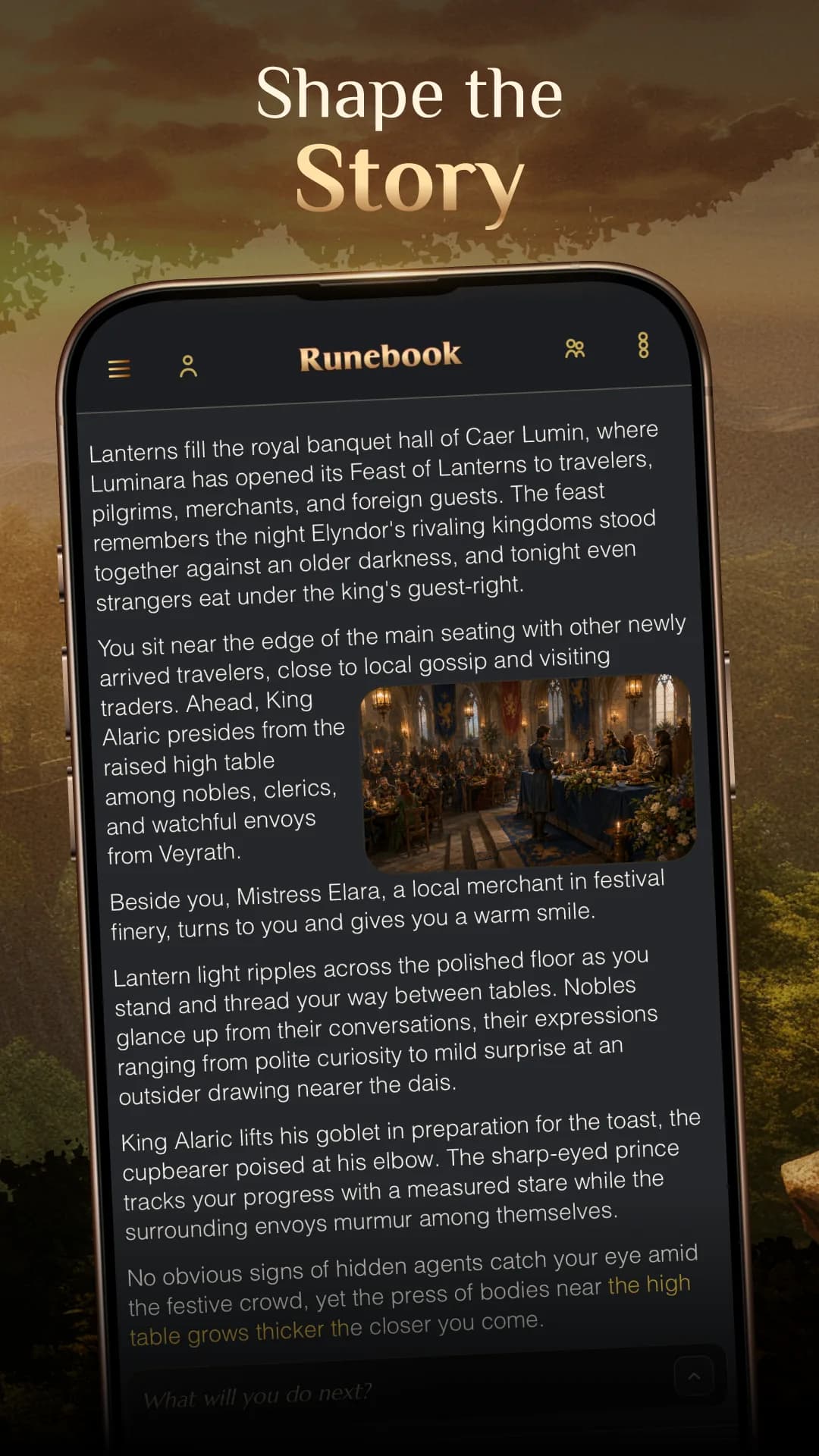
Play Runebook on iPhone, iPad, or Android, and continue the same stories and characters wherever you sign in.
Your Runebook account keeps your stories and characters connected across web and mobile.
A Storyteller that remembers
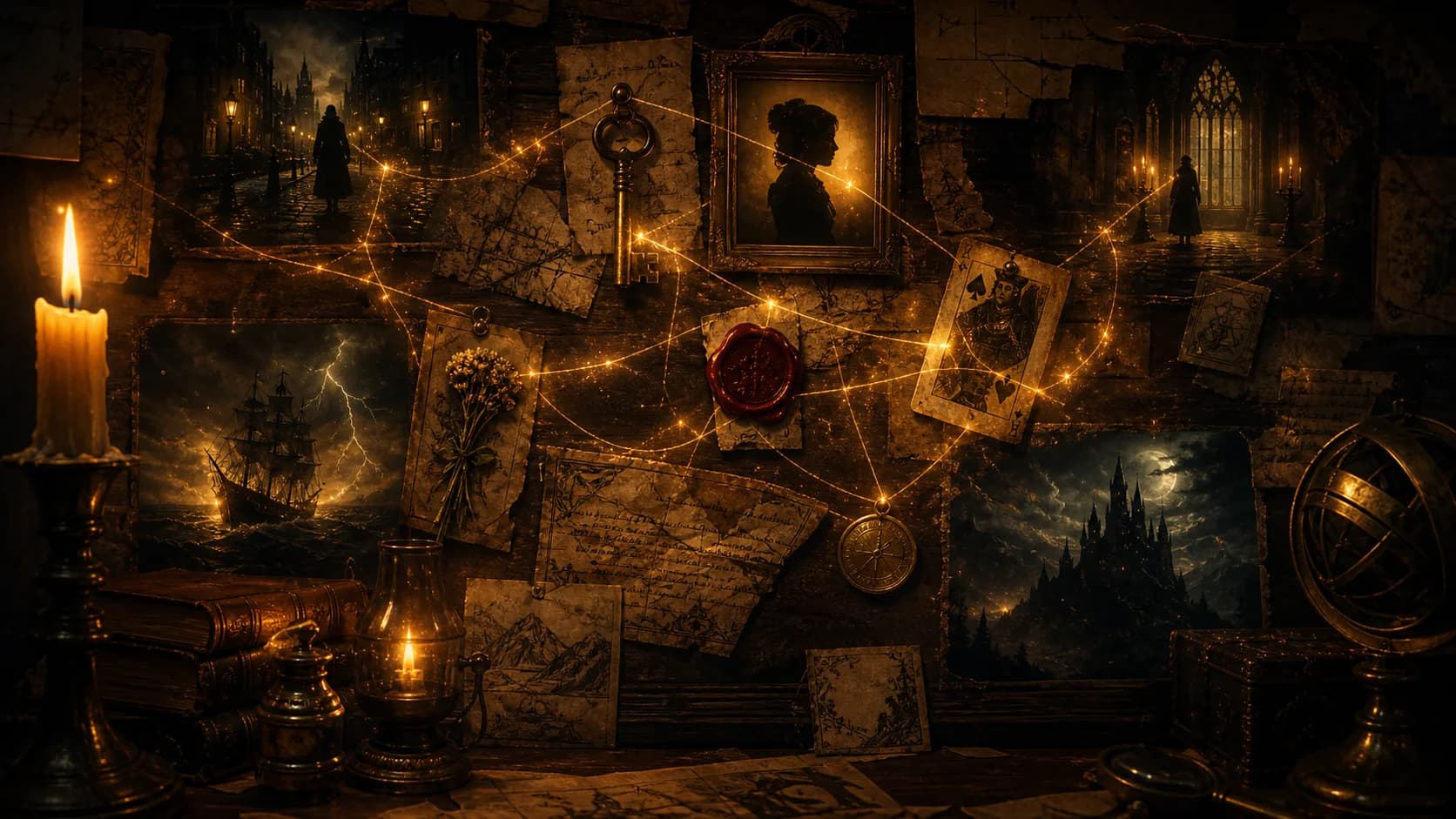
A promise made early can return when it matters most. The name you gave the innkeeper. The debt you walked out on. The stranger you saved when nobody was watching. The world didn’t just save your progress. It kept the receipt.
Runebook is an interactive AI story that remembers your choices and acts on them. The people you’ve met remember what you did, and treat you accordingly. Places carry the scars you left. What you carry and earn stays yours. Come back after three weeks away and nothing has been forgiven or forgotten. Something you did is still waiting for you.
Memory here isn’t trivia storage. It’s the right detail, surfacing at the worst possible moment.
Not a smarter paragraph. A longer shadow.
Stories with real endings
A chat can go on forever. That’s the problem with a chat.
A Runebook story is going somewhere. Scenes gather weight. Rivals make their moves. The small thing you did long ago comes back asking to be answered. You can feel it building, the way a good book tightens when you’re holding the last fifty pages.
Mystery is memory under pressure. Romance is a feeling with history. Horror is dread that knows your name. Whatever the genre, a story that’s going somewhere is what a wandering chat can never give you.
And when the ending comes, it’s yours: a finale your choices shaped, not one picked off a shelf. Then you do the one thing no chatbot lets you do. You finish. You close the book. You start another.
Hear your story told
Turn the sound on. The Storyteller reads every scene aloud as you live it, each word lighting up as it’s spoken. The people you meet speak in their own voices: the detective’s clip, the suitor’s hesitation, the thing in the walls.
It’s an audiobook where the main character is you, and the narrator doesn’t know the ending either. The confession, the threat, the almost-kiss: read them in silence, or be told your story. Both are yours.
Narration follows your pace, not the other way around. Pause mid-scene, come back at midnight, and pick up right where you left off.
See your story
As your story unfolds, Runebook generates visuals inspired by the people, places, and pivotal moments taking shape around you.
A rain-soaked manor. A suspect across the table. The character you brought into the world. Images appear inside the story itself, with the prose flowing around them instead of sending you to a separate gallery.
Read it, hear it, and watch it take shape around your choices. Every story follows a different path, and its visuals grow from the world you create.
Bring your friends (or don’t)
Runebook is built for one. Your story is a private novel nobody else will ever live.
But a story is its own kind of night when you share it. Invite friends into a private story and live it together: everyone in the scene, talking out loud over built-in voice chat while the plot tightens around all of you. Or open a public story and let others join in, or just watch from the gallery. Mystery night where nobody printed the booklets. Movie night, but you’re all in the movie. Somebody always does the thing you’d never dare, and the story remembers them for it too.
What is an AI story game?
There are four kinds of story apps, and three of them are not this.
Some apps write stories for you. You give them an idea, they hand back pages: useful for writers, but you’re the editor, not the hero. Some let you chat with a character. Charming for a scene, but a conversation alone has no stakes or ending, just a personality in an empty room. And some hand you an authored episode with choices at the corners: tap A or B, and the story walks a path someone else already paved.
An AI story game is the fourth kind. It’s a story game where you are the main character. A Storyteller carries the plot forward from what you actually do, so the plot is assembled from your decisions instead of selected from a menu. Say anything, try anything: accuse the wrong person, confess too early, walk out of the wedding, and the story bends to carry it. The difference fits in one line: the story is not just written. It is played.
Runebook is built to be the most complete version of that idea: an interactive AI story with real shape. A story that keeps building toward something. People who remember how you treated them. A narrator who reads it aloud as you live it. Images on the page. An ending your choices earn. Drama is what changes because you said it, and in a Runebook story, you’re the one saying it.
Frequently asked questions
Runebook is an AI story game where you are the main character. You tell it the kind of story you want: a murder to solve, a love worth risking, a haunting to survive. The AI Storyteller opens the first scene with you inside it. From there you tap a choice, type anything, or say it out loud, and every scene is written in response to what you do. The story keeps building, the people you meet remember how you treated them, and your choices steer everything toward a real ending. You can read your story on the page or hear it narrated aloud, with scene images woven through the prose like an illustrated novel.
A chatbot can improvise a scene. It can't run a story. Character chat apps give you one personality in an empty room, without a plot that builds, stakes that rise, or an ending to reach. That's a chatbot wearing a costume. Runebook's Storyteller is doing a different job: it runs the whole story. The people you meet want things from you. The plot keeps building toward an ending that answers everything. Secrets come out, debts come due, and what you did earlier decides what happens next. That is what makes Runebook an AI RPG rather than a chatbot that simply continues the last paragraph. Drama is what changes because you said it, and in Runebook, things change.
Those apps hand you a script someone already wrote, with a choice at each corner. The story can only go where an author paved a path. Runebook works differently: the Storyteller carries the next scene forward from what you actually did, so you can try the thing no menu would ever offer: accuse the wrong person, confess too early, walk out of the wedding. The story doesn't break. It responds. And because the path is shaped by your choices, no two people ever live the same story, including you, the second time.
No. There are no rules to learn and no manual you were supposed to read. If you can describe what you'd do next, you can play. Every turn offers choices you can simply tap, and you can always ignore them and type or say anything else. The Storyteller quietly handles everything behind the scenes; at pivotal moments, fate gets a say, and that's as close to "gamey" as it ever feels. If you've ever read a book and argued with the main character's decisions, you already know how to play.
Describe the story you want, in any setting or time period, and Runebook builds it. That part is live today. The engine runs murder investigations, forbidden romances, hauntings, heists, lost expeditions, court intrigue, second chances, and slow-burn betrayals, in worlds from candlelit manors to 1927 New York to places entirely your own. You can start from a ready-to-play story or seed your own with a single sentence. If you can name the feeling you want, there's a story for it.
Yes. In a fantasy story, Runebook's Storyteller can take on the role of an AI Dungeon Master: building the world, portraying NPCs, judging pivotal risk, and carrying the campaign forward from whatever you or your party chooses to do. Familiar 5e-inspired mechanics—classes, ability scores, skills, HP, inventory, XP, levels, and dice—sit beneath the story, but you never need to manage a rulebook. Play solo or with friends, or use Runebook for stories far beyond fantasy.
It remembers your story: the people you've met, the places you've changed, the promises you made, and what your choices set in motion. Leave for a week and the world doesn't reset. The people you crossed are still cross, and what you carry and earn stays yours. The point isn't trivia recall. It's consequence: a promise made early can return when it matters most. If it has a past, it can have a future. Something you did is still waiting for you.
Both. Runebook supports solo and multiplayer play. Playing alone, your story reads like a personal novel, narrated and illustrated, that no one else will ever live. With friends, you can share a private campaign and talk through it over built-in voice chat while the plot tightens around all of you. You can also open a public story that others can join, or simply watch. A story with friends is its own kind of night: everyone is in the scene, nobody knows the ending, and somebody always does the thing you'd never dare.
Yes. Runebook is available in English, Latin American Spanish, and Japanese. Choose your language from the flag menu in the website header, or from Language in the in-game Settings menu. Menus, gameplay, stories, and voice narration follow the language you choose. More languages are coming soon.
Play Runebook in your browser, or download the iOS or Android app. Sign in with the same Runebook account and your stories and characters stay connected across phone, tablet, and desktop. Narration, scene images, and stories with friends are available on every supported platform.
Runebook plays its drama at a PG-13 register. Romance is tasteful and emotionally driven: the tension comes from history, risk, and what's left unsaid, and intimate scenes fade to black. Horror trades in dread rather than gore: the sound in the walls, the name it shouldn't know. The Storyteller will break your heart and raise the hair on your neck, but it keeps the page one you could read aloud. If you're looking for explicit content, Runebook isn't built for that.
Runebook is live in paid Early Access. You can start playing in your browser now, and founding players should expect visible product movement as we keep tuning speed, reliability, long-term memory prioritization, and how consequences surface. If you want occasional product notes and offers, you can still join the email list lower on the page.
Runebook | AI Story Game Where You're the Main Character