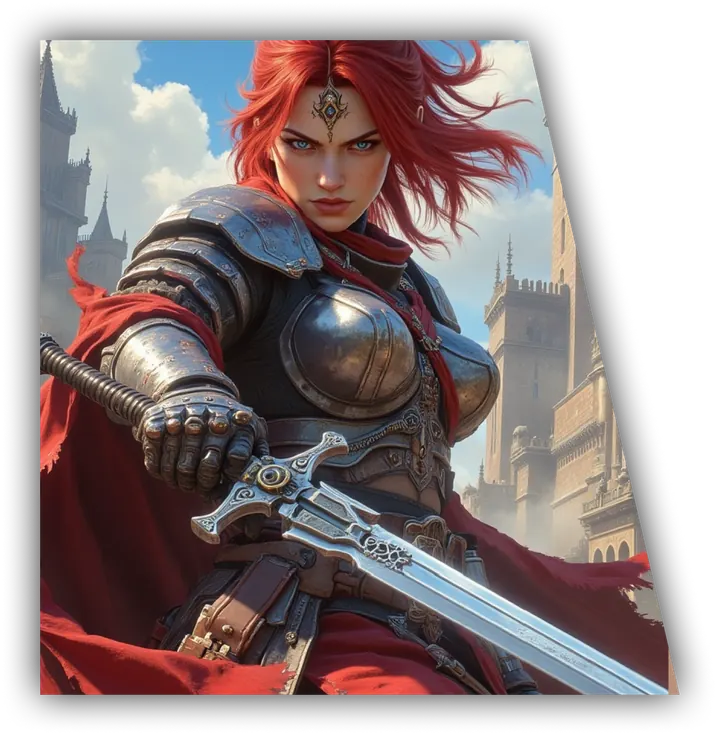
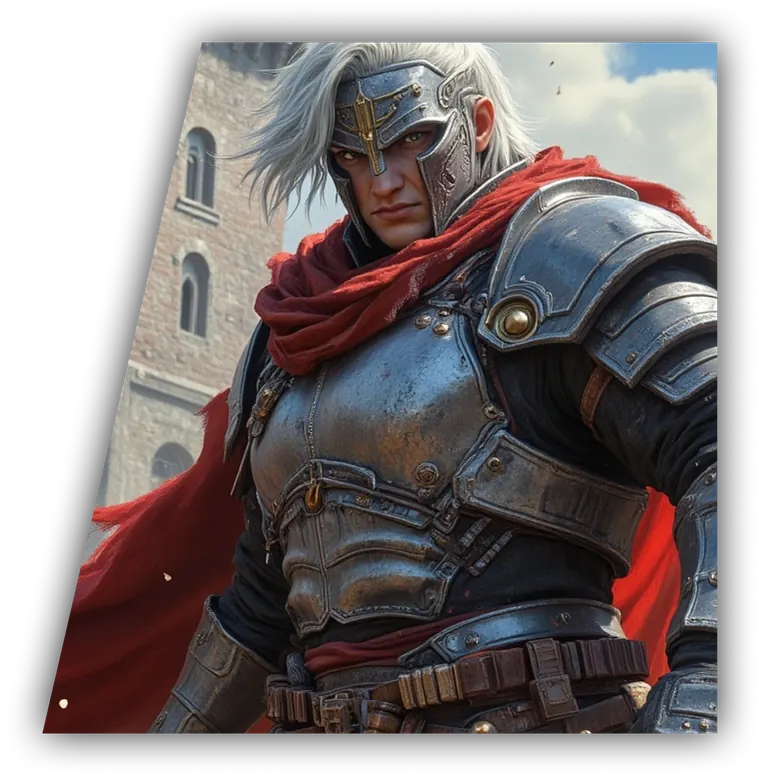
Be the Villain: A Game Where You Author the Antagonist
Playing the villain isn't about cruelty applauded. It's about a world that honestly resists you — and finding the line you won't cross.
Admit it. At some point, in some book or film, you rooted for the wrong side. Not ironically. Not for a chapter. You watched the antagonist walk into the room and felt the story sharpen, and some part of you wanted them to win — or at least to keep going long enough that you could find out what they were for. This is close to universal, and it is worth being honest about what it is. If you have ever searched for a be the villain game, you were not looking for permission to be cruel. You were looking for the other chair at the table: the one where the plan originates, where the will is, where the story's pressure comes from instead of where it lands.
Here is the short version. A good be-the-villain game is not a sandbox that applauds cruelty; it is a story that lets you author an antagonist's arc while the world reacts honestly — heroes organize against you, allies grow afraid of you, and every cost you impose stays on the ledger. The pleasure is not getting away with it. The pleasure is discovering, under real pressure, what you are actually willing to do.
That second discovery is the whole game. Most people who play a villain find their line faster than they expected — and not where they expected it.
What rooting for the villain actually means
The appetite is older than games. Milton gave Satan the best speeches in Paradise Lost and readers have been arguing about whether he meant to ever since. Shakespeare lets Richard III turn to the audience and make us complicit before the first scene is out. The Wife of Bath, Long John Silver, Becky Sharp, Tom Ripley — literature keeps building magnetic wrongdoers, and readers keep leaning in.
Why? A few honest reasons.
The villain is usually the character with a plan. Heroes react; antagonists act. When you root for the villain, you are often rooting for agency itself — the one person in the story who decided what the story would be about.
The villain gets to want things out loud. Most protagonists spend their arcs being dutiful. The antagonist has already made the forbidden calculation: this matters more to me than being good. Watching someone live inside that calculation is fascinating because most of us have made small, deniable versions of it and never said so.
And the villain is a question the story asks about you. When a well-written antagonist explains themselves and you catch yourself nodding, the book has just measured something. That flicker of agreement is information. It tells you where your own arguments live.
None of this is an appetite for harm. It is an appetite for the point of view — for standing where the pressure originates and seeing what the world looks like from there. A book can only let you visit that vantage. A story you play can let you hold it.
What a be the villain game owes you
Here is where most power fantasies fail, and it is worth naming the failure precisely: they flatter you. The henchmen cheer. The victims are cartoons. The city falls without anyone in it seeming to mind. Cruelty becomes a cosmetic, and the whole thing curdles into a costume party — you are wearing the villain's coat, but nothing underneath it weighs anything.
An honest villain story owes you the opposite. It owes you resistance.
It owes you heroes. Not speed bumps — heroes, with the moral clarity you abandoned, arriving on schedule the way they always do in the stories you grew up on. If you burn the granary, someone's daughter takes up the cause. If you buy the magistrate, an incorruptible one gets appointed. The genre has a physics: villainy summons its own opposition. A game that suspends that physics has not made you powerful. It has made you unopposed, which is a different and much duller thing.
It owes you fear where you wanted loyalty. Your lieutenants should flinch. The advisor who admired your ambition early in the story should start choosing her words carefully later, and you should notice, and it should cost you something — information, warmth, the pleasure of being known. Machiavelli said it is safer to be feared than loved; he did not say it was pleasant. A world that reacts honestly makes you live inside that trade instead of just quoting it.
And it owes you a ledger that never closes. The village you made an example of does not reset. The rival you ruined has a brother. Consequences that persist are the difference between an antagonist's arc and a rampage — this is the same principle that makes any story with consequences that last feel like it is actually about you. Villainy without memory is just noise with a cape.
One thing an honest villain story never does: it never makes the victims the joke. The moment the world starts winking — the moment suffering becomes set dressing — the tragedy collapses and takes the fun down with it. The dark pleasure of playing the antagonist depends entirely on the world staying serious. You can only fall from a height that is real.
The line you thought you'd cross
Here is the strange, reliable discovery, and the real argument for playing the antagonist rather than just reading one: villain players find their limits.
Say you spend an evening as the usurper. You have planned this coldly. You have justified it beautifully — the king is weak, the realm needs a hand that will not tremble. You take the treasury. You take the wall. You exile the old marshal instead of executing him, telling yourself it is strategy. Then the story does what honest stories do: it puts the actual choice in front of you, unabstracted. The marshal's family. A named child. A guard who trusted you once, kneeling, asking a direct question.
And you discover you will not do it.
Not because a design document forbade it — because you declined, in the moment, with the option live. That refusal is authorship of the rarest kind. In a book, the villain's restraint (or lack of it) belongs to the writer. In a story you play, the line belongs to you, and you only learn where it runs by walking toward it. The tyrant who spares the child is a more interesting character than the tyrant who doesn't — and the player who found that mercy under pressure knows something new about themselves that no chapter could have told them.
This is why villainy played honestly bends toward tragedy. Not tragedy as gloom — tragedy in the old sense: a person of real will, paying real costs, arriving somewhere their choices built. Whether your antagonist falls, repents, wins hollowly, or stops one step short of the abyss, the arc was authored. That is the appetite the confession at the top of this essay was really about.
It is worth saying what this essay is not about, because the search terms blur together. Loving a villain — being the one drawn toward the dangerous other across the table — is its own genre with its own gravity, and we have written about villain romance separately. And the villainess is a specific literary role, usually a doomed one you inhabit to subvert; playing the villainess is its own art. This essay is about the third thing: writing the antagonist yourself, arc and all.
Authoring your antagonist in Runebook
Runebook is an AI story game built for exactly this kind of authorship. The Storyteller runs the world; you act by typing what you want to say or do. Nothing requires you to be good. Announce yourself as the usurper, the necromancer, the charming poisoner in a regency drawing room — the Storyteller does not flatter you for it. It answers you. Heroes rise. Allies hesitate. The story remembers what matters, which for a villain means the ledger stays open: the village you burned stays burned, and its survivors remember your name.
You can play solo or bring friends — one of you the tyrant, the rest the reluctant court. Fantasy, mystery, historical, horror, or a custom story from your own premise. Narration reads the scenes aloud; imagery shows you the throne you took. And because the whole thing runs on being the main character of the story, it works just as well when the main character is the one everyone else fears.
Somewhere in your run there is a line you believe you will cross. Go find out. Create an account and start your first story — it's included.